LETTER TO ROBBEN ISLAND
Imagine you receive a message like this from a close friend…
What are your thoughts?
What emotions does it trigger?
The reality of letters sent to prisoners
Censorship
Censorship is the act of reviewing something and choosing to remove or hide parts of that are considered unacceptable. It describes the process or idea of keeping things like obscene word or graphic images from an audience and is often imposed by governmental authority, local or national, religious body, or a powerful private group.
Censorship during apartheid
- As a result of physical abuse being banned at prisons, authorities and wardens resorted to actions that had a psychological effect on prisoners
- Wardens and authorities would prevent prisoners from receiving visits from their families, incoming and outgoing letters were either censored or did not reach the recipient at all and they were deprived of their education.
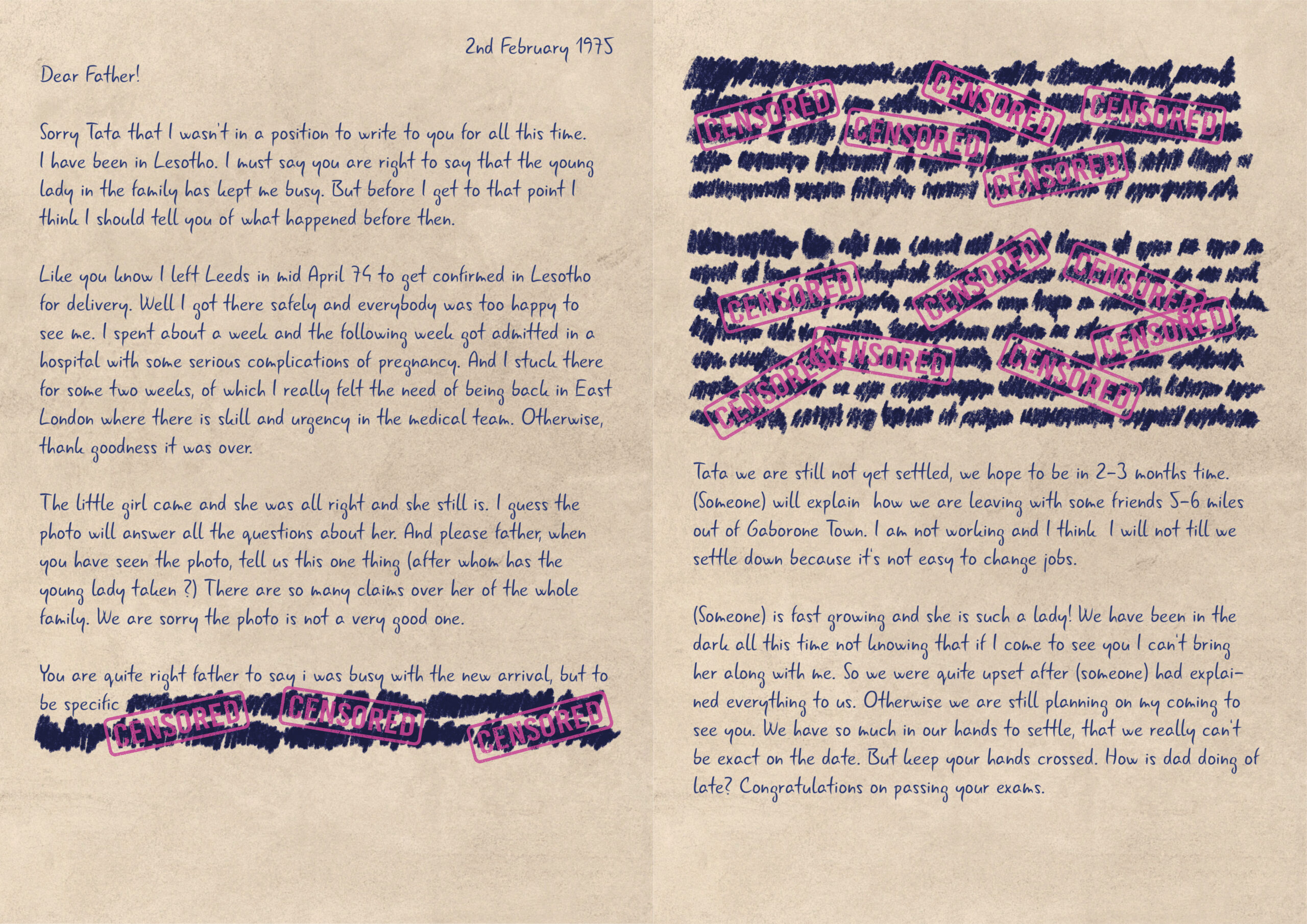
SWIPE FOR AN EASY TO READ COPY
DISCOVER THE DETAILS BELOW
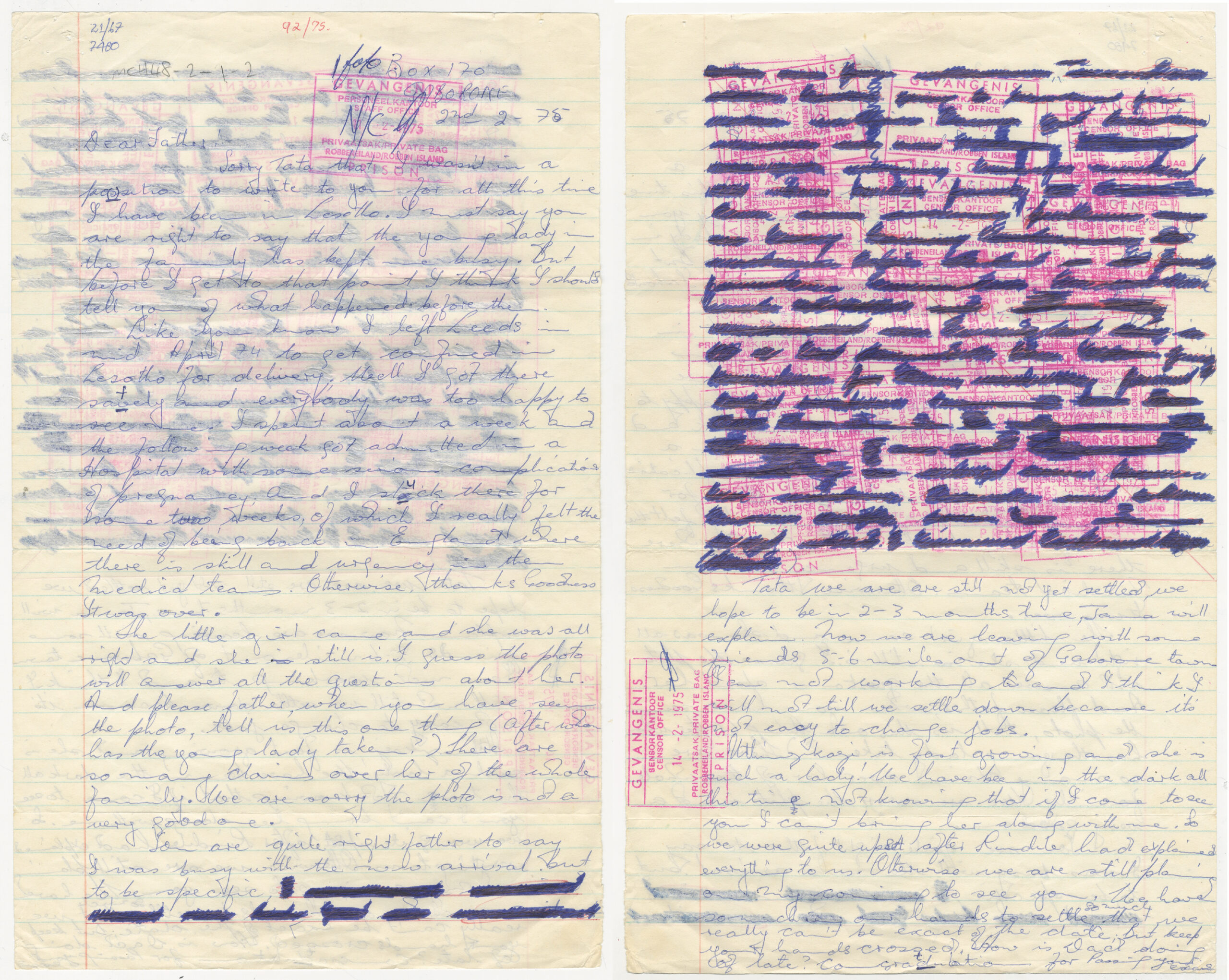
This letter is written by a daughter to her father who was imprisoned on Robben Island in 1975. In the letter the daughter informs her father she successfully delivered a baby girl and that he is now a grandfather. She attached an image of the new born baby and wants to know who the baby takes after. The daughter speaks about not yet being settled in a new home and struggling to find work. This indicates that she probably moved to her homeland.
The daughter speaks about not being able to visit her father in prison. This was common at the time as families would often wait for long periods of time before being approved or allowed to see their families. The father would be unable to hold his granddaughter for months or even years.
In 1970 the apartheid government passed the Bantu Homeland Citizenship Act. This was where the citizenship of black people were stripped as South Africans and instead they became citizens of the homeland/ Bantustan that they were from. We can assume that the daughter was forced to her homeland as a result of this Act.
The 1970’s was also a pivotal time for the anti-apartheid movement. There were lots of protests at the time and the country faced increased international pressures in the form of sanctions and disinvestment. During this time, many people were being arrested as the apartheid believes became more harsh in enforcing laws. With the arrival of the new born baby, the daughter feared for their safety.
The sanctions and disinvestment that South Africa faced at the time increased unemployment amongst the black community which resulted in job scarcity.The daughter, like many others living in homelands were unable to find unemployment making the cost of living that much higher.
Most of the content of the letter has been censored as was a common practice done by prison authorities and wardens. The father would never be able to know what his daughter was trying to tell him. This added to the emotional trauma of the father and other prisoners who missed out on key information because of the censorship.
Letters were censored by authorities and wardens at Robben Island. They maliciously censored many letters beyond recognition or arbitrarily withheld mail and photographs. Thousands of personal letters would never be discovered.
From 1961-1991 Robben Island prison was used for chiefly political prisoners and convicted criminals. These were individuals who were fighting against the apartheid regime. It was used as a prison and place where people were exiled and banished for more than 400 years.
These prisoners represented a cross-section of South African society that opposed the apartheid state and its policies. They included men and women, old and young, working and middle class, black and white members of several political organisations and movements. While the definition of political prisoners is vague, a special report on political imprisonment in South 3 Africa in April 1991 identified connections with activities that fall into three categories: armed struggle; political organisation and mobilisation; and popular action against the apartheid state.
During the apartheid era the prison became well known for brutal treatment and human rights abuses. As a result of physical abuse being banned at prisons, authorities and wardens resorted to actions that had a psychological effect on prisoners.
Wardens and authorities would prevent prisoners from receiving visits from their families, incoming and outgoing letters were either censored or did not reach the recipient at all and they were deprived of their education.